
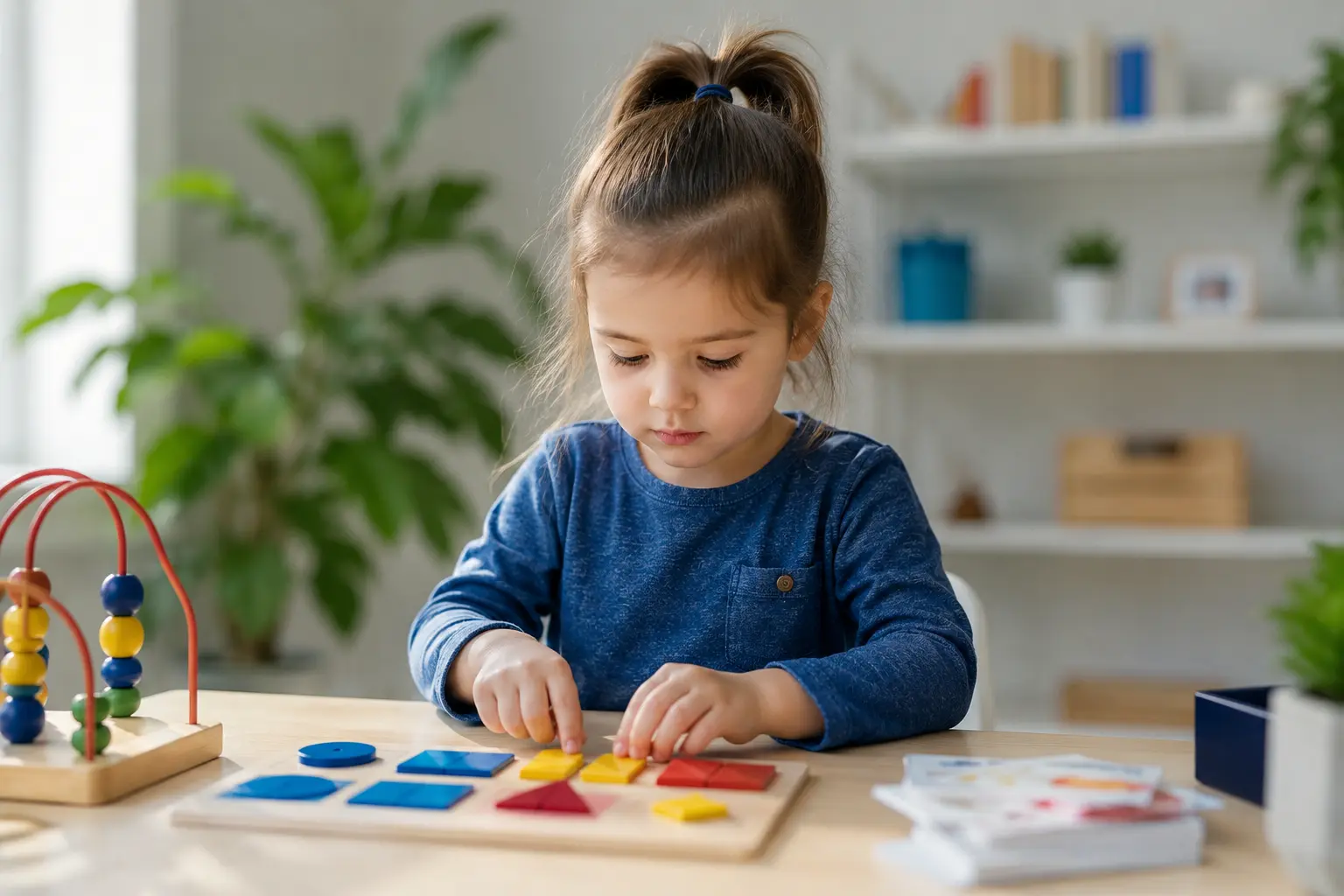
Your child seems a step ahead of peers: maybe they spoke early, maybe they never stop asking “why?”, or maybe they can stay locked into one topic for hours. And you keep wondering: “Could my child be gifted?” That is a very normal question. But the answer is much more layered, and more interesting, than the usual online list of “10 signs” makes it seem. Let’s talk about it calmly, without pressure or labels.
What does giftedness actually mean?
First, let’s clear up a misconception: giftedness does not just mean “getting high grades at school.” In fact, some gifted children never stand out in class. Experts define giftedness as a child showing clearly advanced ability in one or more areas compared with peers. This is usually an inborn difference in the brain; it cannot be “created” with private lessons or extra study.
From an intelligence-test perspective, giftedness is often linked to an IQ of 130 or above — which is roughly the top 2% of the population. But take note: IQ is only one part of the picture. Creativity, deep motivation, and exceptional talent in a specific area such as music, math, or art can also be part of giftedness. So a high test score is not the only measure.
Common signs in gifted children
No child shows all of these; what matters is recognizing the overall pattern. Common signs include:
| Sign | What it looks like in daily life |
|---|---|
| Fast learning | Picks things up quickly with very little repetition |
| Large vocabulary | Uses surprising words for their age, reads early |
| Strong curiosity | Constantly asks deep “why” and “how” questions |
| Strong memory | Remembers details easily for a long time |
| Deep focus | Can spend hours absorbed in a topic of interest |
| Abstract thinking | Creates hypothetical, logical questions like “What if this happened?” |
| Strong sense of fairness | More sensitive than expected for their age to injustice |
| Gets along well with adults | Enjoys talking with older people or listening to adult conversation |
Strong imagination, perfectionism, and emotional or sensory sensitivity are also often part of the picture.
An important reality: development may not be in sync
There is a very common but rarely discussed pattern in gifted children: asynchronous development. In other words, a child’s intellectual age may move ahead of their emotional and social age. For example, a 9-year-old may speak with the logic of a 13-year-old, but melt down like a 7-year-old when they lose a toy.
Knowing this can be a huge relief, because families often wonder, “Why does such a smart child get frustrated so quickly?” The answer is simple: intelligence and emotional maturity can develop at different speeds. That is not a flaw; it is a natural part of giftedness.
Sometimes intelligence hides a challenge: “twice exceptional” (2e)
This may be the most overlooked issue of all. Some children are both gifted and have a learning or developmental difference such as dyslexia, ADHD, or autism. This is called “twice exceptional” (2e). The hard part is this: the child’s intelligence can mask the difficulty they are facing — or the difficulty can hide the intelligence.
So if you see a contradictory picture like “very smart but failing at school” or “speaks beautifully but resists writing a paragraph,” that may not be laziness. It may be a 2e profile waiting to be recognized. These children need support and enrichment at the same time.
An interesting lesson from history: Terman’s “genius children” study
There is a very instructive story in the history of this topic. In 1921, psychologist Lewis Terman selected more than 1,500 children with IQs above 135 and followed them for years. At the time, the common belief was that “very smart children are weak, sickly, and socially awkward.” Terman’s findings disproved that bias: these children were generally healthy, social, and well balanced.
But the striking part is this: a high IQ did not guarantee extraordinary success. Most of the children followed lived successful but ordinary lives; they did not produce “world-changing geniuses” at the rate people expected. In fact, according to the story, some children who were left out because their IQ was considered too low later won the Nobel Prize. The lesson is valuable: a high score is not destiny on its own. Curiosity, persistence, opportunity, and emotional health are at least as decisive as intelligence.
So whether your child is gifted or not, the most valuable thing you can give them is not a number; it is a mind that loves learning and is not afraid to try.
So what should you do?
If you think your child may be gifted, calm support is better than panic or pressure. Here are a few practical steps:
- Observe, but do not label: Putting a child into the “genius” box can place a heavy burden of expectations on them. First, see them as a child.
- Nurture their interests: Offer books, puzzles, experiments, art, or coding in the areas that spark their curiosity.
- Give appropriate challenge, but allow failure too: Gifted children shut down when they are bored; but pressure to be perfect all the time is exhausting. Send the message that making mistakes is normal.
- Do not neglect the emotional side: Help them manage sensitivity and perfectionism; it also helps a lot to find friends with similar interests.
- Get a professional evaluation if needed: If you have a serious concern, a thorough assessment by a psychologist — for example, tests like WISC — is the right path. Especially in a picture of “bright but struggling,” look into the possibility of 2e as well.
A short reminder
Online tests can be a fun and useful starting point on this journey, but remember: they are an indicator, not an official diagnosis. If you want a fun first step, you and your child can look at our free IQ test without signing up; and if you want to feed a curious mind, you can try the puzzle, memory, and logic games in our brain games together.
In the end, the goal is not to find a label; it is to see your child’s strengths, stay beside them where they struggle, and help them love learning. Gifted or not, that is what they need most.