Imagine playing a song perfectly on the piano without ever taking a single lesson, or stating the exact day of the week for a date hundreds of years ago in a second. This might sound like something from a movie, but it is real. Savant syndrome is one of the most astonishing and misunderstood aspects of the human mind. It shows us that intelligence is not as simple or single-faceted as we might think.
What Is Savant Syndrome?
Savant syndrome is a rare condition where exceptional ability in a specific area coexists with a neurodevelopmental difference or brain condition. A person who struggles with certain basic skills might demonstrate superhuman capacity in one particular domain. This striking contrast is what makes the syndrome so fascinating.
In Which Areas Does It Appear?
Savant abilities usually cluster in a few specific fields. The most common are music, especially playing a piece after hearing it just once; art and remarkably realistic drawing; calculation, such as calendar dates or massive multiplications; and extraordinarily detailed memory. A savant might memorize an entire book or a detailed city map. What stands out is how narrow yet deep these abilities are.
Innate or Acquired?
Savant abilities are usually innate and appear at an early age. Even more surprising is the rare "acquired savant syndrome": an extraordinary talent suddenly emerges following a head injury or brain event. When someone suddenly becomes a math genius or an artist after an accident, it raises incredible questions about the hidden potential inside the human brain.
What Happens in the Brain?
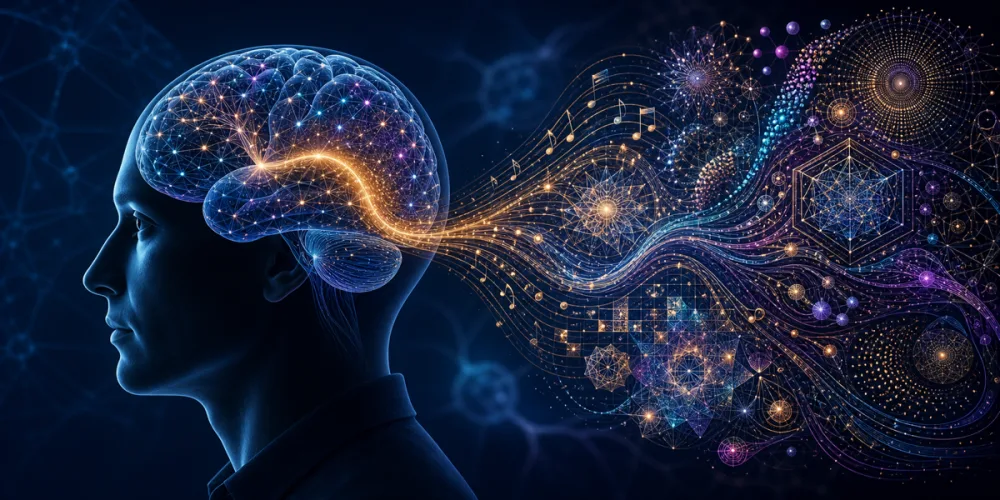
The exact mechanism is still not fully understood, but one prominent theory suggests that when certain brain regions stop suppressing particular skills, those abilities surface. It is as if specific areas normally limit each other, but when that balance changes, one area steps forward dramatically. Savant abilities might be extraordinary expressions of capacities latent in all our brains.
Is Intelligence a Single Trait?
This is the most insightful aspect of savant syndrome. We often view intelligence as a single, general ability. Savant cases demonstrate that the mind consists of many independent systems. A brain that struggles in one domain can excel extraordinarily in another. This clearly shows how inadequate simple labels like "smart" or "not smart" really are.
Common Misconceptions
Popular culture often fits savants into a single stereotype, making people assume all savants are identical. In reality, every savant is unique, with different talents, challenges, and personalities. Having savant abilities does not make daily life easier; many individuals still require significant daily support. We should see them as whole individuals, not as a spectacle.
What Can We Learn from It?
Savant syndrome challenges us to rethink the limits and hidden potential of the human brain. It reminds us that intelligence cannot be reduced to a single score and that every mind has its own map. Perhaps the core lesson is this: defining a person by their difficulties prevents us from seeing their incredible capabilities. Every mind remains a domain of discovery in its own right.
The Connection to Autism
Savant abilities are often associated with autism, but two common misconceptions need clarifying. First, not every autistic person has savant skills; they occur only in a small minority. Second, savant syndrome is not unique to autism; it can appear alongside other developmental differences or brain conditions. The movie stereotype that "every autistic person is a genius" does not reflect reality. The right approach is to see each person with their unique strengths and challenges, free from stereotypes.
If you want to test how varied your own cognitive skills are, try our free IQ test.