
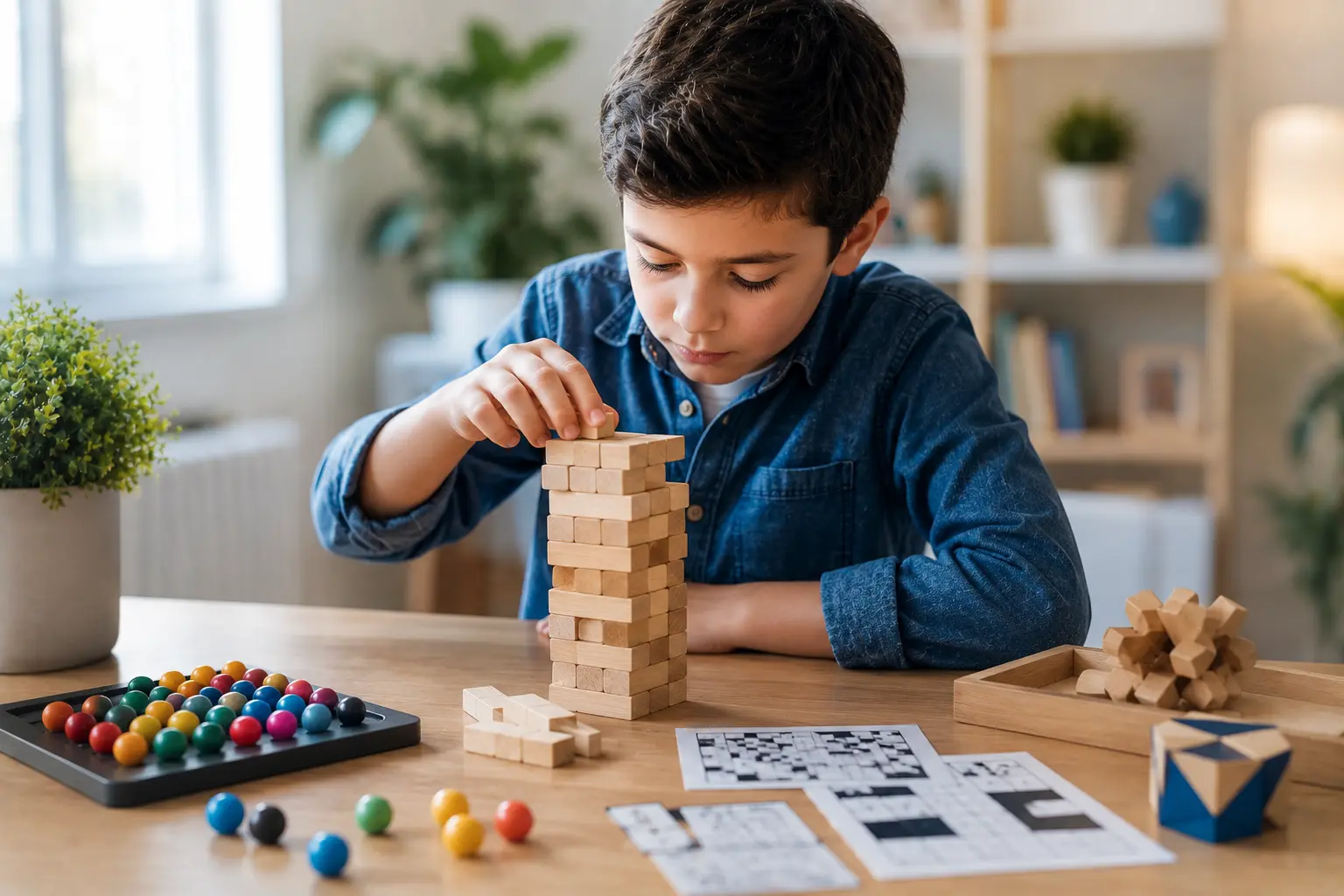
This scene will feel familiar: You start a task. Just as you are about to focus, your phone buzzes. You check one notification, then a message, then “let me just look at this,” and suddenly seventeen tabs are open. Half an hour later, you come back and think, “Where was I?” Sound familiar? The good news is that attention is not fixed at birth; it is a skill you can improve. Like a muscle, it gets stronger with the right exercises. Let’s talk about what weakens your focus and how you can train it.
Attention is the most valuable “muscle” of this era
One of the first major figures to address this seriously was William James, one of the founders of psychology. In his classic 1890 work, he defined attention as the mind’s ability to choose one option clearly and vividly from many. But his key point was this: the ability to repeatedly gather a scattered mind and bring it back was, in his view, nothing less than judgment, character, and will. In other words, learning to focus is almost like building character itself.
More than 130 years have passed, and those words may be more relevant now than ever, because attention has never had so many things competing for it at once.
First, know the enemy: “attention residue”
There is a concrete scientific reason focus feels so hard today. Researchers show that every switch from one task to another has a cost; this is called “task-switching cost.” And when you jump to something else before finishing a task, part of your mind stays stuck on the previous one. This “attention residue” slows you down and makes you more likely to make mistakes because you cannot fully give yourself to the new task.
In short: those moments when you think you are doing five things at once are really moments when your brain keeps changing modes and burning energy. Multitasking is not a superpower; it is hidden loss of efficiency.
Attention is not one single thing
Let’s clear something up: what we call “attention” is actually made up of several different skills. It helps to know them so you can understand what each game trains:
| Type of Attention | What does it do? | Exercise that trains it |
|---|---|---|
| Selective attention | Filtering distractions and focusing on the task | Stroop, Spot the Difference |
| Sustained attention | Staying focused for a long time | Schulte table, chess |
| Divided attention | Tracking two things at once | Counting backward + walking |
| Executive control | Suppressing impulses and changing direction | Say the opposite, Stroop |
Games and exercises that train attention
Stroop game (color-word conflict). The classic discovered in 1935 by psychologist John Ridley Stroop. Write the word “RED” in blue ink; then try not to read the word and instead say the color of the ink. It is surprisingly hard to suppress your brain’s automatic reading impulse — and that is exactly why it strengthens selective attention.
TRY IT: On a sheet of paper, write color names in different colors, then quickly say only the colors. Time yourself on the first try, then try again a few days later.
Schulte table. Place the numbers 1 to 25 in random order inside a 5x5 grid. Keep your eyes fixed near the center and find the numbers in order as fast as you can. It is one of my favorite exercises because it works both sustained attention and visual scanning speed.
Spot the Difference. Catching the small differences between two similar images is a direct workout for selective visual attention. The Spot the Difference game in our brain games section is made for exactly that.
Matching and memory games. Remembering where cards are placed engages attention and working memory at the same time.
Chess, sudoku, logic puzzles. Because they require you to stay locked onto one problem for a long time, they are a marathon for sustained attention.
Breathing/focus practice. When your mind wanders, gently bring it back to your breath — this is direct practice for the “bringing back a scattered mind” skill James described. Even a few minutes a day can make a difference.
But games alone are not enough
Let’s be honest: getting good at a game usually just makes you better at that game. What really shapes your focus in real life is your daily routine. A few basics:
- Single-task rule: Do not jump to another task before finishing the first. This is the strongest way to reduce attention residue.
- Silence notifications: During your focus time, keep your phone out of sight. A notification you do not see is better than one that breaks your work.
- Pomodoro: 25 minutes of full focus, 5 minutes of break. The brain settles more easily when it knows the time is limited.
- Sleep and movement: A tired, inactive brain cannot focus; good sleep and regular exercise are the invisible fuel of attention.
A small IQ note
Here is an interesting link: attention and working memory are among the things IQ tests measure too. For example, the “digit span” section in Wechsler tests asks you to focus and use short-term memory. So focus is one of the measured parts of intelligence. But do not get this wrong: attention exercises do not magically raise your IQ; they more often help you use the mental resources you already have more efficiently. And that is usually what you want anyway.
In short: attention is a skill that grows as you work on it. You can challenge it in a fun way with games like Stroop, Schulte tables, and spot-the-difference, and make it last with habits like single-tasking and good sleep. To get started, you can check out our free brain games, and if you are curious about your own mental state, try our IQ test. If you apply just one thing today, make it this: put your phone in another room before you start your next task. The rest becomes surprisingly easy.